

Not sure what to wear? Where to park? When to clap? Check out our Concert Guide.
The Program
Gabriela Lena Frank - Elegía Andina
Rodion Shchedrin - Carmen Suite (selections)
Guido López-Gavilán - Cantus
OKAN Duo
Made possible by the WW Symphony Guest Composer/Artist Fund - Underrepresented Voices
Concert Snapshots
Elegía Andina was written while Frank was completing her doctorate in musical arts and marked the beginning of her orchestral career.
Shchedrin arranged Carmen Suite for his wife, Bolshoi ballerina Maya Plisetskaya, transforming Bizet’s opera into a ballet scored for strings and percussion.
Guido López-Gavilán was born into a musical family. His mother gave him piano lessons and his father taught him his first guitar chords.
In 2024, OKAN performed an NPR Tiny Desk Concert.
Want to learn more? Click the button below to explore articles about the composers and the pieces, and read the program notes.
Explore the Music

Wine Sponsor
Before the concert and during intermission:
Wine is available from our wine sponsor.
Sweet treats and non-alcoholic drinks are also available.
All proceeds support the Walla Walla Symphony.
About the Guest Artists
OKAN
Taking its name from the word for heart or soul in the Afro-Cuban religion of Santería, 2-Time JUNO Winner OKAN fuses Afro-Cuban and other global rhythms with jazz, folk and classical forms.
Embracing genres and roles that have historically been dominated by men, co-leaders, composers and multi-instrumentalists Elizabeth Rodriguez and Magdelys Savigne bring a fresh perspective to Latin and world jazz fusion through their powerful vocals, incredible musicianship and potent lyrical content.
Both are JUNO-nominees for their work with Battle of Santiago and Grammy-nominees for their contributions to Jane Bunnett and Maqueque of which they are former members.
Having worked with Bomba Estereo, Lido Pimienta, Bianca Gismonti among others, OKAN follows up on their Juno-nominated and Independent Music Award-winning debut album Sombras, with their JUNO Award-winning album Espiral, and a JUNO Award-winning album OKANTOMI, out on the Lulaworld Records label.
Born in Havana, Cuba, Elizabeth Rodriguez is a classically trained violinist who served as concertmaster for Havana’s Youth Orchestra.
Magdelys Savigne hails from Santiago de Cuba and graduated with honours in orchestral percussion from Havana’s University of the Arts.
okanmusica.com
Program Notes
GABRIELA LENA FRANK
Born September 26, 1972, in Berkeley, California
Elegía Andina (2000)
Last WWS Performance: First performance at tonight’s concert
Approximate length: 11 minutes
This work was premiered on December 10, 2000, at the Troy Savings Bank Music Hall in Troy, New York by the Albany Symphony Orchestra conducted by David Alan Miller. It is scored for piccolo, two flutes, two oboes, two clarinets, two bassoons, two horns, two trumpets, timpani, percussion, and strings.
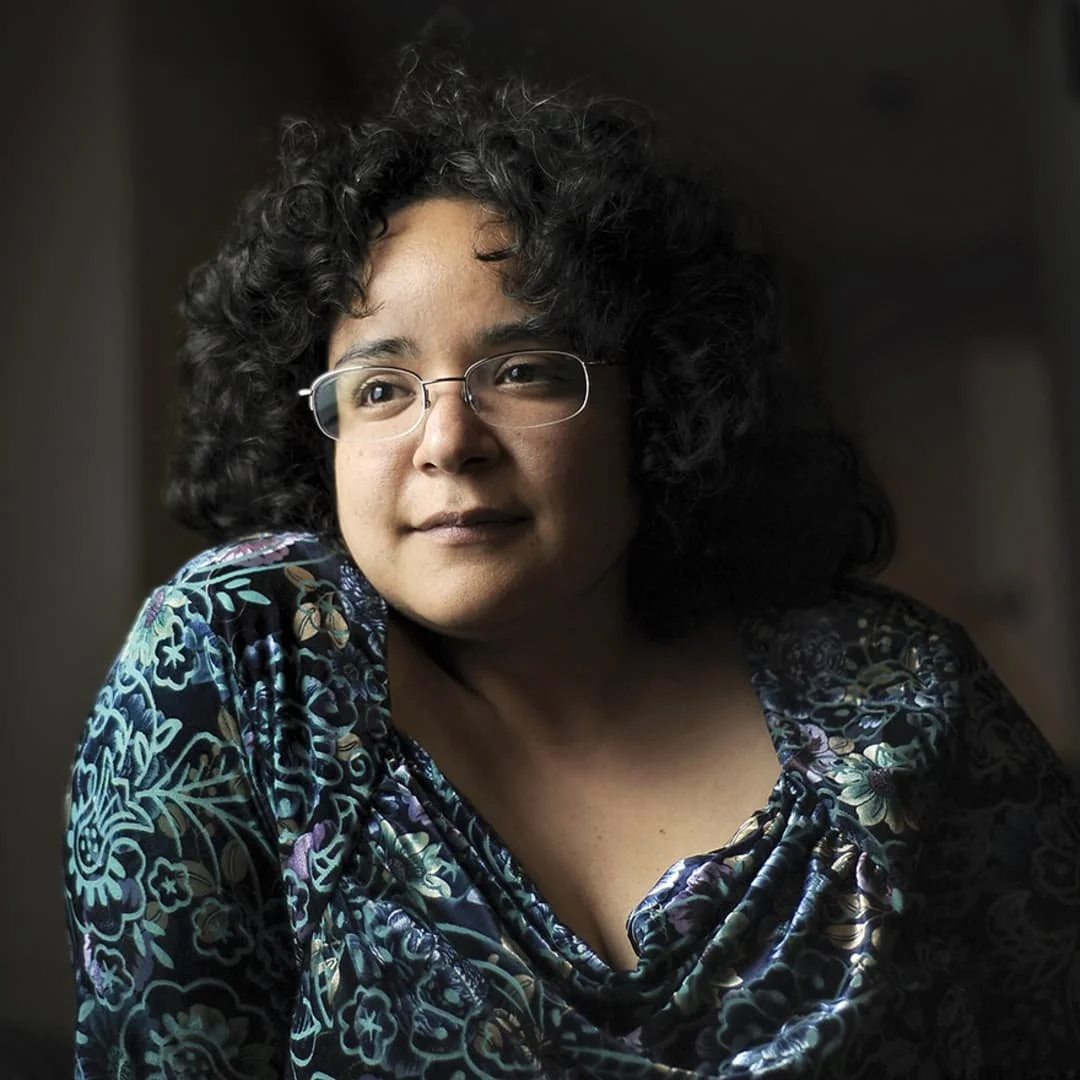
Cultural heritage has always been central to the musical life of Gabriela Lena Frank. Born in Berkeley, California to a mother of mixed Peruvian/Chinese ancestry and a father of Lithuanian/Jewish descent, Gabriela is constantly exploring her multicultural ancestry through her compositions. Inspired by the likes of Bartók and Ginastera, she has traveled extensively throughout South America in pursuit of folklore and indigenous music that are then incorporated into her own Western classical framework.
In 2025, Gabriela concluded a long-term residency with the Philadelphia Orchestra, marked by the world premiere of Picaflor: A Future Myth. She was also inducted into the American Academy of Arts and Letters. In 2026, her first opera The Last Dream of Frida and Diego will be staged at both the Metropolitan Opera and the Lyric Opera of Chicago. With a libretto by the Pulitzer-prizewinning playwright Nilo Cruz, The Last Dream of Frida and Diego is one of the most successful American operas of the decade, with acclaimed runs at Los Angeles Opera and San Francisco Opera following its 2022 world premiere at San Diego Opera. Other upcoming premieres include two collaborations with MacArthur Fellow J. Drew Landham: a song cycle for the St. Paul Chamber Orchestra, and a work for the Pacifica Quartet and narrator Sigourney Weaver.
Winner of a Latin Grammy and nominated for Grammys as both composer and pianist, Gabriela also holds a Guggenheim Fellowship and a USA Artist Fellowship. Her work has been described as ‘crafted with unself-conscious mastery’ by The Washington Post, who also cited her as one of the most significant women composers in history. She has received commissions and performances from leading American orchestras including the Chicago Symphony, the Boston Symphony, the Atlanta Symphony, the Cleveland Orchestra, the Houston Symphony and the San Francisco Symphony. She has also been commissioned by cellist Yo-Yo Ma, soprano Dawn Upshaw, the King’s Singers, the Cuarteto Latinoamericano with guitarist Manuel Barrueco, and Brooklyn Rider, and has collaborated with conductors Marin Alsop, Yannick Nézet-Séguin, Mei-Ann Chen, Rei Hotoda, David Robertson, and Andres Orozco-Estrada. In 2026, NAXOS will release a recording of her and Nilo Cruz’s oratorio Conquest Requiem, featuring the Nashville Symphony and conductor Giancarlo Guerrero.
Civic outreach is an essential part of Gabriela’s work. She has volunteered extensively in hospitals and prisons, with her current focus on developing the music school program at Anderson Valley High School, a rural public school of modest means with a large Latino population in Boonville, CA.
Gabriela attended Rice University in Houston, Texas, where she earned a B.A. (1994) and M.A. (1996). She studied composition with Sam Jones, and piano with Jeanne Kierman Fischer. At the University of Michigan, where she received a D.M.A. in composition in 2001, Gabriela studied with William Bolcom and Leslie Bassett, and piano with Logan Skelton.
Frank describes her Elegía Andina with great fervor:
“Elegía Andina for Orchestra (2000) is dedicated to my older brother, Marcos Gabriel Frank. As children of a multicultural marriage (our father being Lithuanian-Jewish and our mother being Chinese-Peruvian-Spanish), our early days were filled with Chinese stir-fry cuisine, Andean nursery songs, and frequent visits from our New York-bred Jewish cousins. As a young piano student, my repertoire included not only my own compositions that carried overtones from Peruvian folk music but also rags of Scott Joplin and minuets by the sons of Bach. It is probably inevitable then that as a composer and pianist today, I continue to thrive on multiculturalism.
“Elegía Andina (Andean Elegy) is one of my first written-down compositions to explore what it means to be of several ethnic persuasions, of several minds. It uses stylistic elements of Peruvian arca/ira zampoña panpipes (double-row panpipes, each row with its own tuning) to paint an elegiac picture of my questions. The flute part was particularly conceived with this in mind but was also inspired by the technical and musical mastery of Floyd Hebert, principal flutist of the Albany Symphony Orchestra. In addition, as already mentioned, I can think of none better to dedicate this work to than to ‘Babo,’ my big brother — for whom Perú still waits.”
Biography and Program Notes adapted from the composer’s writings
RODION SHCHEDRIN
Born December 16, 1932, in Moscow, Russia
Carmen Suite (1973)
Last WWS Performance: First performance at tonight’s concert
Approximate length: 30 minutes
This work was premiered on April 20, 1967, at Moscow’s Bolshoi Theatre. It is scored for five timpani, castanets, three cowbells, four bongos, guiro, snare drum, bells, vibraphone, marimba, triangle, claves, woodblocks, tambourine, crotales, maracas, chocalho (a Brazilian shaker), whip, temple blocks, tenor drum, bass drum, tam-tam, glockenspiel, hi-hat cymbals, tom-toms, cymbals, and strings.
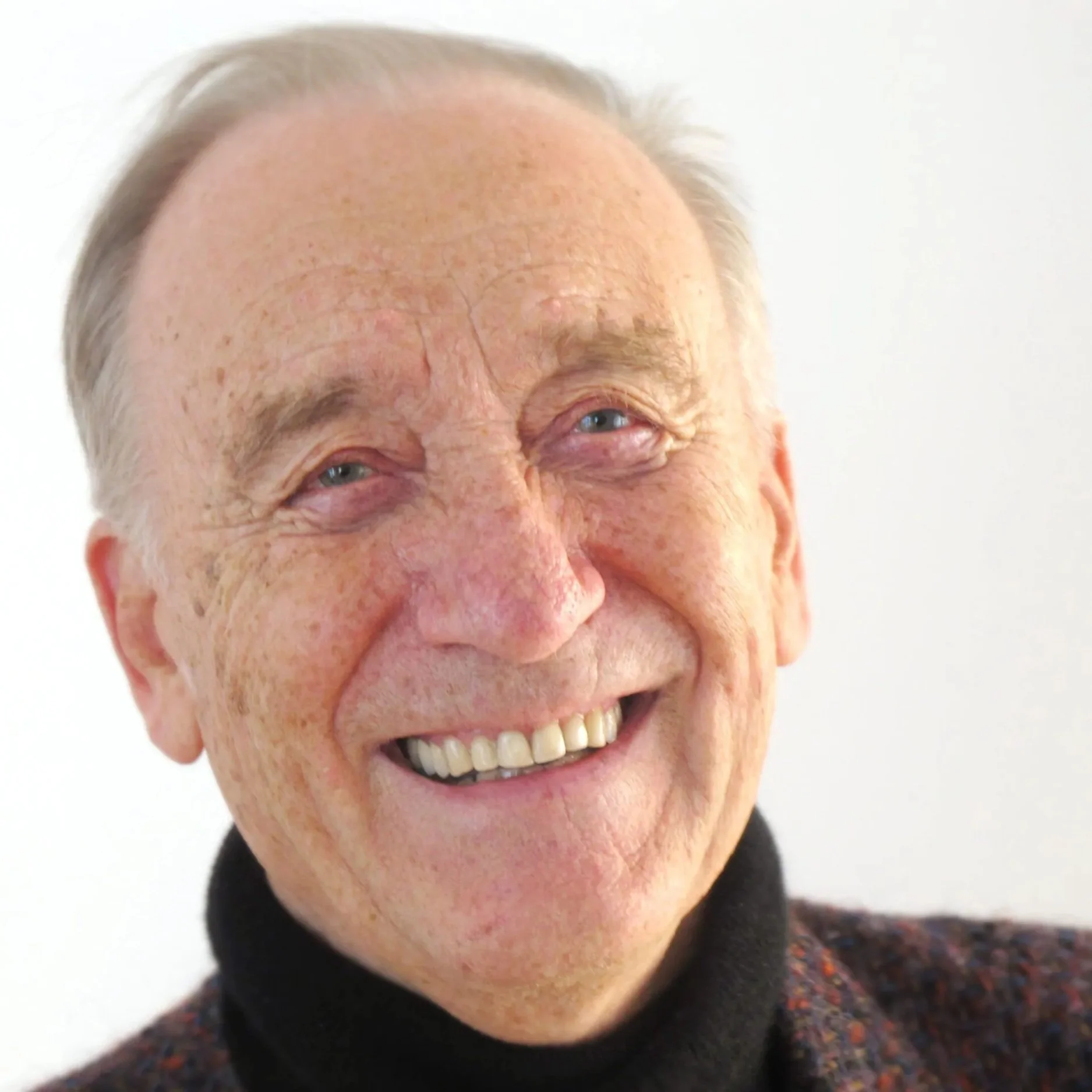
Rodion Shchedrin was an important Soviet composer but was overshadowed by Shostakovich and Prokofiev. His music is colorful and exciting, and it deserves a wider audience. Shchedrin’s father was a composer who sent his son to Moscow Choral School (Rodion’s grandfather was a priest in the Orthodox Church) and the Moscow Conservatory. Although Shchedrin’s music was, at first, mostly tonal, his later music drew upon chance elements, dissonance, and popular styles.
Undoubtedly, Shchedrin’s most famous work is his Carmen Suite for percussion and strings. Although performed today as a concert work, this dazzling piece originated as a ballet. The composer married ballerina Maya Plisetskaya in 1958. After becoming prima ballerina of the Bolshoi Ballet, Maya found herself in need of new works to expand her fame. Of course, she turned to her husband who eventually composed many ballets for her.
For the Carmen Suite, Plisetskaya asked Cuban choreographer to Alberto Alonso to collaborate. She asked Shostakovich to write the music, but he refused what he considered a politically dangerous project. She then turned to Aram Khachaturian who suggested that she should ask her husband. Shchedrin was also afraid of the project, but his trepidation was because of the familiarity of Bizet’s music. As a solution, he decided to use Bizet’s melodies but to dress them in a completely foreign orchestration. He used percussion instruments and strings. There are no woodwinds or brass.
The work is in thirteen sections, nine of which are performed at this concert. Scoring for percussion is difficult because of the vast variety of timbres available to the composer. This novel approach provides a new take of Bizet’s music, one that is fresh, creative, and often surprising. However, the Soviet Minister of Culture saw the work and immediately banned further performances because of adult themes, plagiarism (Bizet’s music), and Shchedrin’s modernistic music. Enter Shostakovich. It is rumored that he spoke to Soviet officials and, because of his influence as the senior statesman of Soviet composers, managed to get the work reinstated. Enjoy this wonderfully colorful work of great individuality.
GUIDO LÓPEZ-GAVILÁN
Born January 3, 1944, in Matanzas, Cuba
Cantus (2015)
Last WWS Performance: First performance at tonight’s concert
Approximate length: 8 minutes
Guido López-Gavilán graduated in Choral Conducting from the Amadeo Roldán Conservatory in Havana, Cuba, in 1966 and in Orchestral Conducting from the Tchaikovsky Conservatory in Moscow in 1973. He has achieved national and international success, conducting at the Warsaw Philharmonic Hall in Poland, in the Great Hall of the Franz Liszt Academy in Budapest, and in the Lisinsky Theatre in Zegreb, Yugoslavia, as well as in Russia, Germany, Bulgaria and Romania. He has conducted all the symphony orchestras of Cuba, highlighting the performances of his work Victoria de Esperanza for symphony orchestra, choir, soloists, actors, dance and cinema. In Latin America, he has achieved notable successes in Mexico, Colombia and Ecuador. He has also participated in many international events, including the Third Inter-American Meeting of Composition in Indiana, the Ibero-American Festival of Contemporary Music in Spain, the Franco Donatoni Festival in Mexico, and the Eighth Forum of Caribbean Composers in Venezuela.
Gavilán is Chair of Direction at the Higher Institute of Art of Havana. His works have been awarded the most important composition prizes in his country. For several years, he has been president of the Havana Festival, a prestigious international event dedicated to contemporary music, which is convened annually. Since its inception, he has been a Full Member of the College of Latin American Composers of Art Music.
One of his most important works is Cantus, composed in 2015. It reflects the Cuban composer's signature style of blending contemporary techniques with Afro-Cuban rhythmic influences and lyrical expressiveness with an evocative, song-like quality. Notice the rich string textures that build in emotional intensity.